475 years of Heerenveen
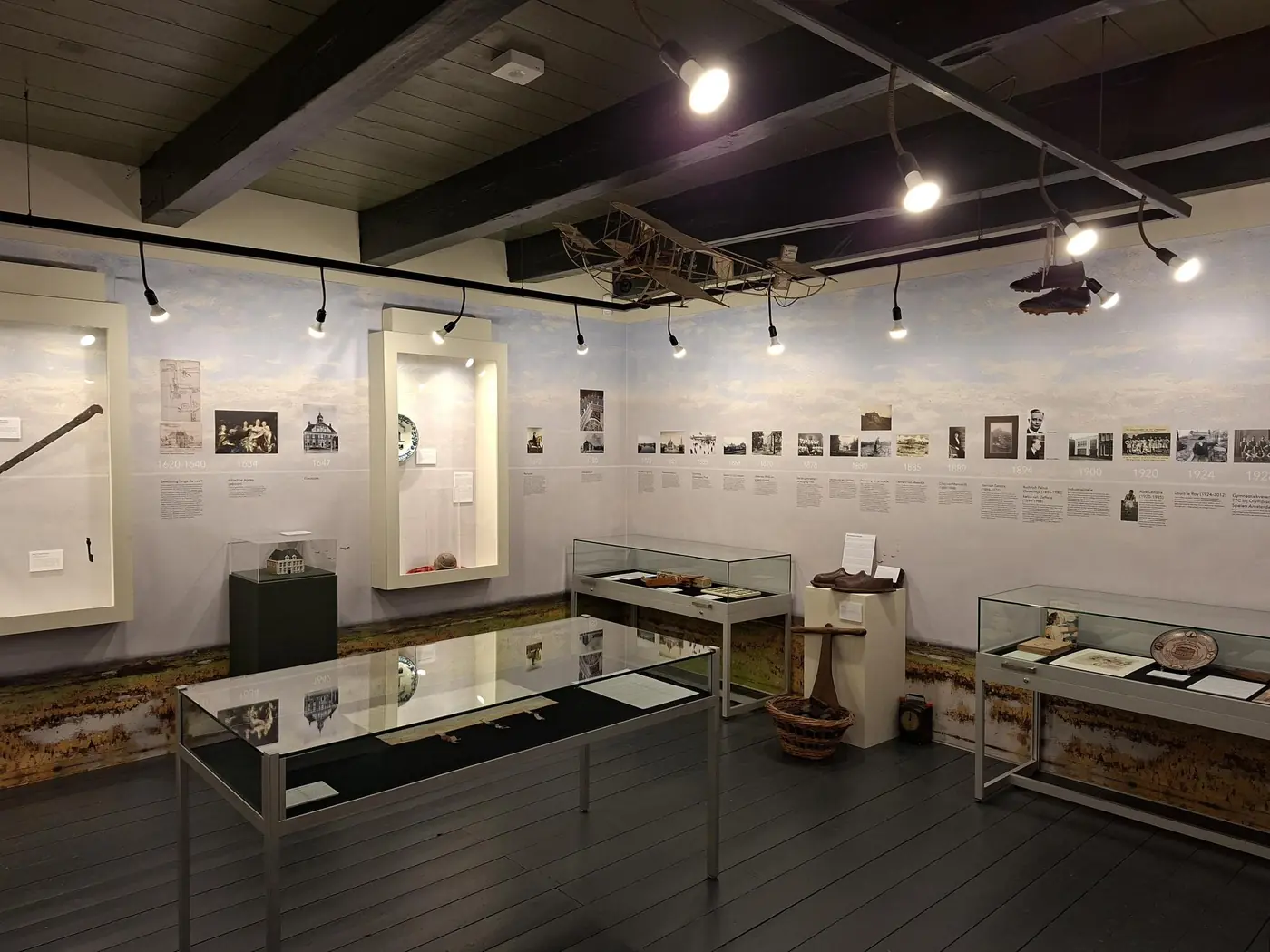
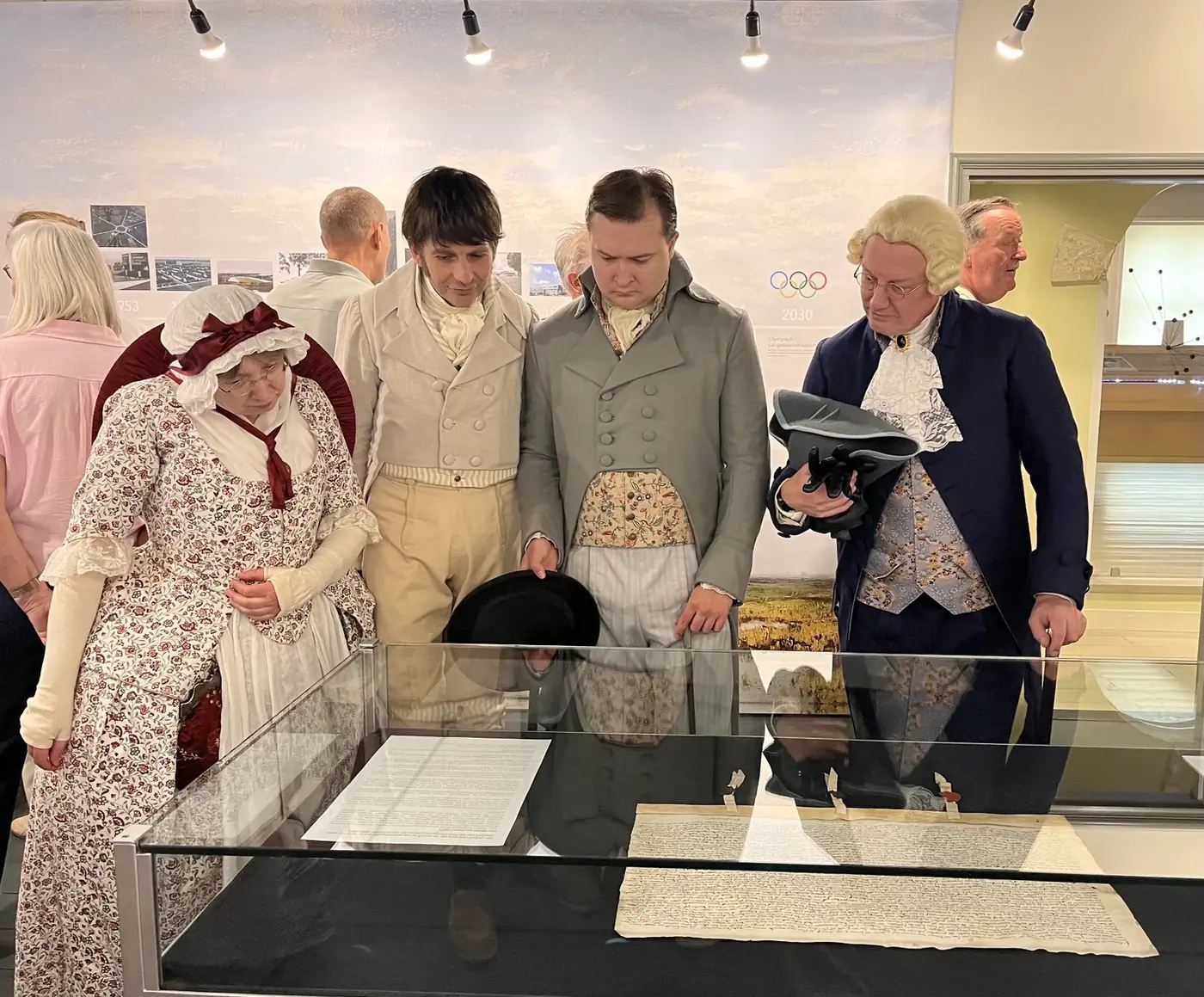
Since 1942, Museum Heerenveen has been collecting the history and culture of Heerenveen and the surrounding villages. In 2026 Heerenveen is 475 years old; the town takes its name from the lords of the peat, the ‘heren van ’t veen’. To mark the anniversary, the museum and the Stichting Historie Heerenveen, the local history society, set up the Kabinet van Verhalen (cabinet of stories): a timeline with objects from both collections. It begins when the Dracht was still a narrow stream in the peat and leads, by way of the peat lords, timber merchants and tanners, the wealthy and the destitute, and the anarchists, to present-day Heerenveen.
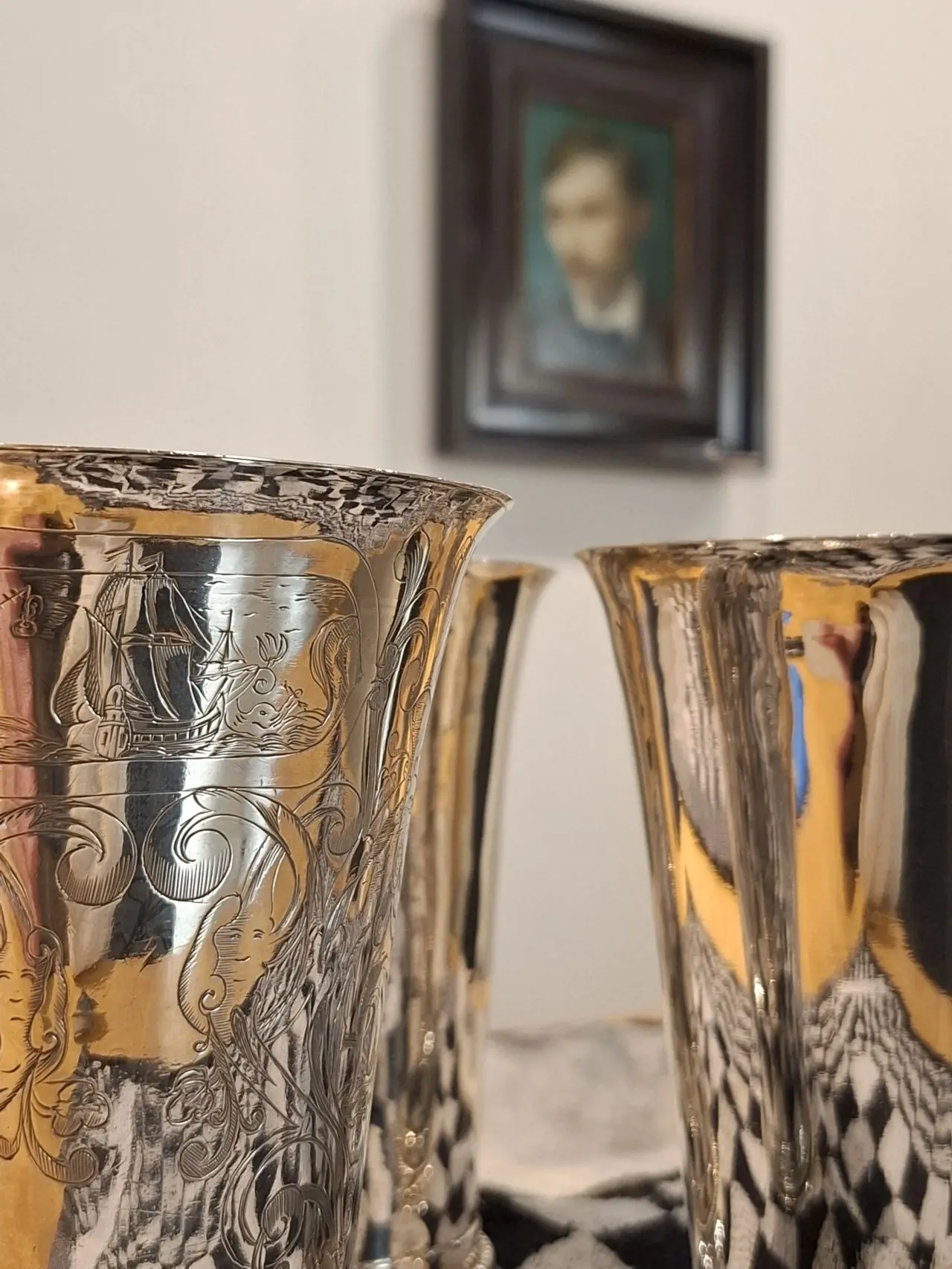
Two permanent rooms look more closely at the art and craftsmanship of the area. The art room shows artists from Heerenveen and its surroundings from 1884 to the present: the dreamy colours of Willem van Althuis, the constructed worlds of Jan Worst, the remembered landscapes of Siert Dallinga, the nocturnal etchings of Tjeerd Bottema, and Jan Mankes, who painted the Frisian landscape and his own face again and again. In the silver room, six display cases hold work by Heerenveen silversmiths from the seventeenth to the nineteenth century. Because Heerenveen had no strict guild, silversmiths from all over Friesland settled there from 1616 onwards. They worked for local magistrates, wealthy citizens and churches; purse frames, spoons and boxes bear figures such as Justice, Hope and Wisdom.
On show now
Until 1 November 2026 the museum is showing ROOTZ, national art with roots in Heerenveen. The town is best known for the football club SC Heerenveen and the Thialf ice stadium, but the exhibition shows that it has also produced visual artists: Siert Dallinga, Jan Worst, Robert Zandvliet, Arjen Boerstra, Robert Geveke, Jochem Hamstra and Rabbo Ploeger. Their work is shown in pairs. Zandvliet’s abstract landscapes face Worst’s hyperrealistic interiors, with light as the common thread, and Dallinga’s melancholy street scenes face Ploeger’s expressionist vistas, linked by the Frisian horizon.
The MuseumGalerie MUGA shows contemporary art that is also for sale; the exhibition changes every six to eight weeks. Since 23 August 2026 it has been showing TOPOLOGIES & TWINS by Harjo Neutkens, an artist and musician from Vessem. His finely painted abstract forms recall sound waves, cells or turbine blades. Admission to the MUGA is free during the museum’s opening hours.
Ferdinand Domela Nieuwenhuis
The same building houses the Ferdinand Domela Nieuwenhuis Museum. It opened in Amsterdam in 1925, making it one of the oldest biographical museums in the Netherlands. Domela Nieuwenhuis (1846–1919) grew up on Amsterdam’s Herengracht and served as a minister in Harlingen and The Hague, among other places, until he left the church in 1879. In 1888 he was elected to parliament for the Schoterland constituency, to the fury of King William III. In parliament he raised the peat workers’ strikes and the truck system, under which workers were forced to buy from their employers’ shops. After 1897 he turned his back on parliament and became an anarchist, founding the paper De Vrije Socialist. Poor Frisian workers called him ‘ús Ferlosser’, our saviour.
The museum shows his study, with books, letters and photographs, and a relief made in his honour by his son César Domela, an artist of the De Stijl movement. At his funeral in 1919, six dockworkers carried his coffin under a red flag. His urn and that of his last partner, Egbertha Godthelp, are kept in the museum. Guided tours can cover the whole museum or focus on Domela Nieuwenhuis alone.
Before you go
Admission is €8.50 for adults and €4.50 for young people aged 6 to 17. Children up to and including 5 and holders of a Museumkaart or friends’ pass go free; groups of ten or more pay €7.50 per person. A cup of coffee or tea is included in the ticket. A guided tour of about an hour costs €40 per group of up to ten people; book at least two weeks in advance. Children can go round the rooms with the museum bingo, and there are games in the museum café.
The museum is in the town centre, about a fifteen-minute walk from Heerenveen station and eight minutes from the Gemeentehuis bus stop (lines 20, 41 and 99). You can park right outside on Ernst van Harenplein; the nearest multi-storey car park is Geerts Willigen.
Sources
This text is based on the website of Museum Heerenveen, consulted in October 2026.
- Museum Heerenveen — homepage
- Museum Heerenveen — about the museum
- Museum Heerenveen — Ferdinand Domela Nieuwenhuis Museum
- Museum Heerenveen — 475 years of Heerenveen
- Museum Heerenveen — the art room
- Museum Heerenveen — silver room
- Museum Heerenveen — exhibition ROOTZ
- Museum Heerenveen — MUGA: TOPOLOGIES & TWINS
- Museum Heerenveen — tickets and visiting
- Museum Heerenveen — guided tours
- Museum Heerenveen — for families
- Museum Heerenveen — contact and opening hours