A face and a story
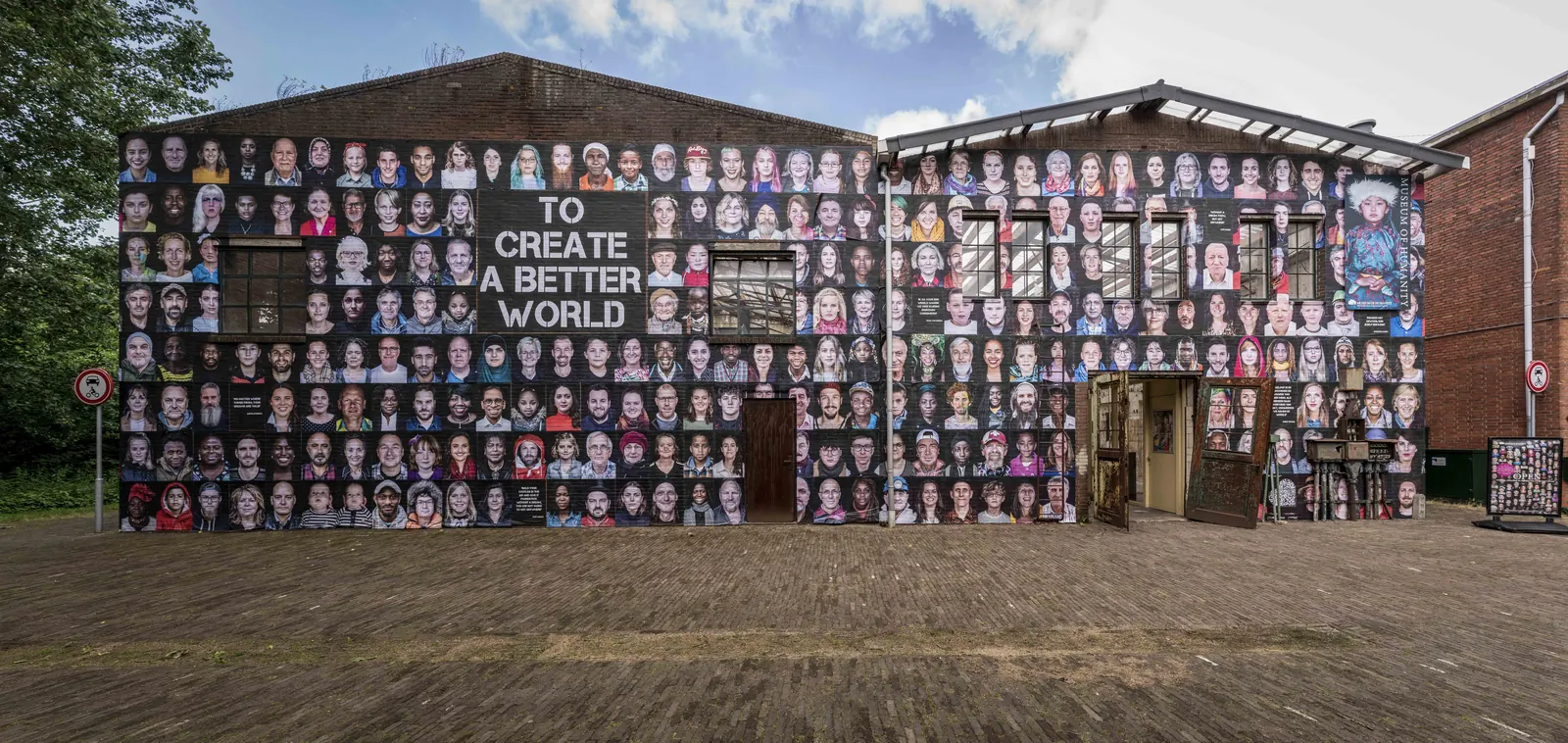
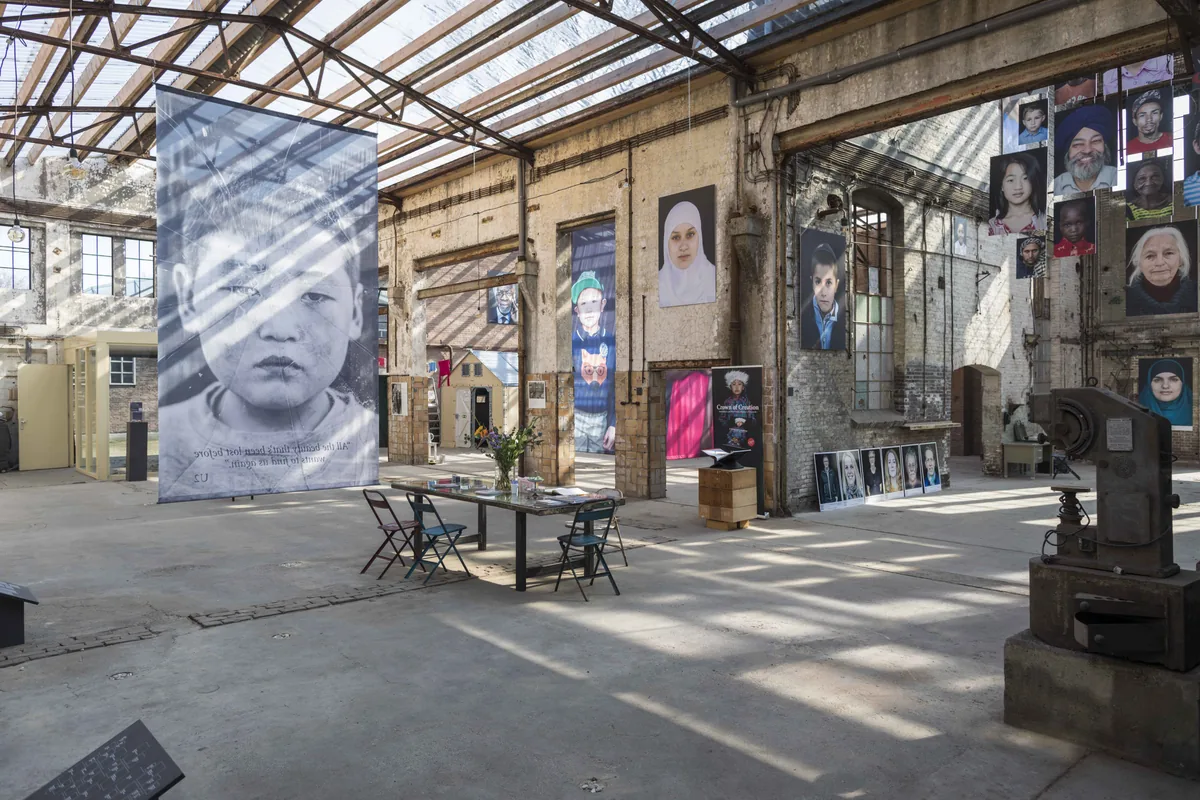
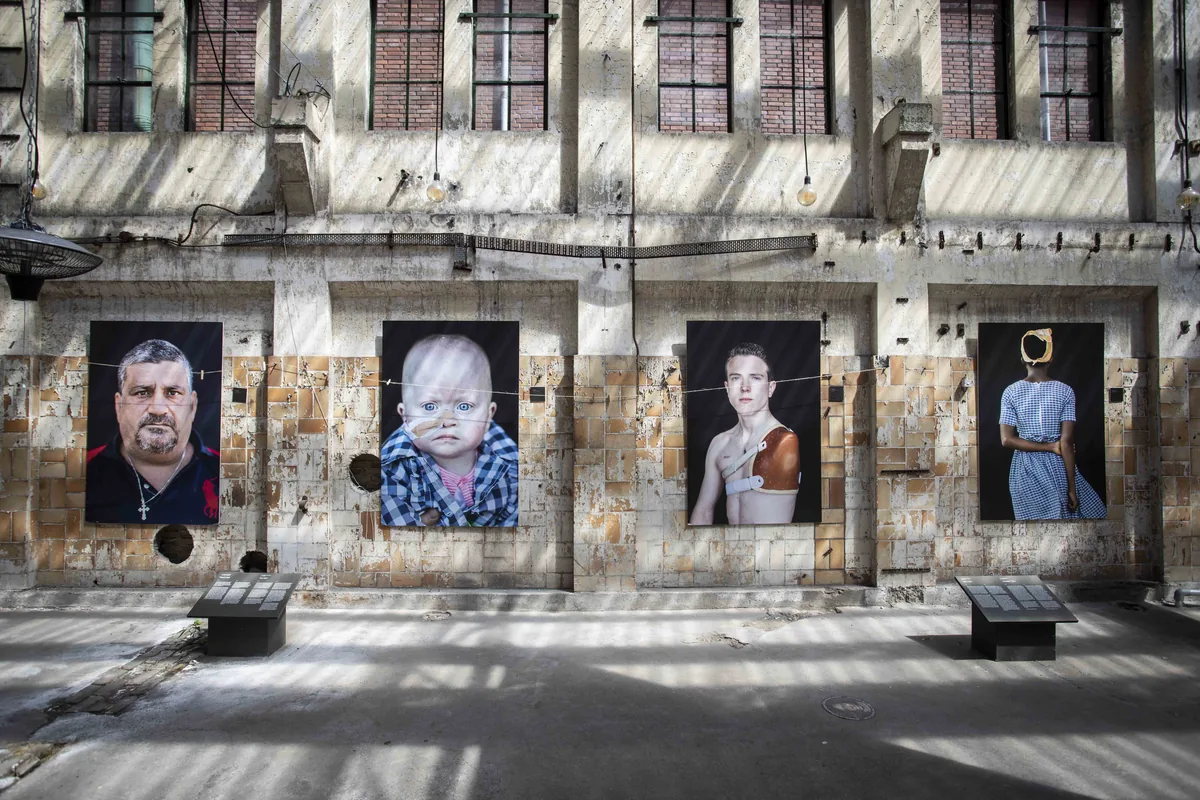
Museum of Humanity starts from the idea that every person is a masterpiece: someone with a story of their own, with light and dark sides. Photographer Ruben Timman has been making dignified portraits of people for 25 years, often against a black background. Working with teams of photographers and storytellers, he has now portrayed more than ten thousand people around the world. In the museum, the portraits hang alongside the personal stories of the people in them. The aim is to counter polarisation: if you really look someone in the eye, you may find that the differences are smaller than you thought.
One feature is the ‘living portrait’: on an interactive TV screen, people such as Ramona tell their own story. According to the museum’s website, the current exhibition is ‘Tegenpolen’ (Opposites): ten pairs of people who at first sight stand directly opposite each other, such as an atheist and a Christian, or a soldier and a peace activist. Ten photographers and ten writers recorded their encounters.
A derelict factory as a museum
The museum is in building 155, the Ketelhuis (Boiler House) on the Hembrug site in Zaandam. Artillery and weapons were once made here, and for a century the site was off-limits. You wander through a dilapidated building, and the decay is part of the idea. The museum goes back to a dream Timman had in 2001 about a derelict ‘museum of humanity’ as an image of the state of humankind. In 2017 he secretly hung the first portraits in an empty building on the site. An official exhibition and the founding of the foundation followed in 2018, and in spring 2019 the museum opened in its current building.
Four pillars
The museum in Zaandam is one of the organisation’s four pillars. Through Humanity on the move, Museum of Humanity takes exhibitions, campaigns and happy-art projects out into the world, such as the touring outdoor exhibition ‘Ik zie jou!’ (I see you!), in which residents of a town meet newcomers. School of Humanity runs creative workshops for pupils, and Humanity at work offers training and campaigns for the workplace. New in 2026 is Humanity on Wheels: a mobile meeting place in a trailer that travels to markets and school playgrounds.
Before you go
Normally the museum welcomes visitors on Fridays and Saturdays. At the moment, however, its visitor page says that it is temporarily closed and only opens for private events. Admission is €7.50 for adults and €5.00 for under-18s; children under 12 go free, and coffee, tea or lemonade is included. Groups pay a separate rate.
The building is dilapidated: the floor is uneven in places, but according to the museum this is not a problem for wheelchairs. There is no toilet in the building, and inside it can be warm or quite cold. The museum shop sells books, posters and postcards, among other things; card payment is preferred. You can combine your visit with a walk around the Hembrug site.
Sources
This text is based on information from the museum’s website.